Víte, že: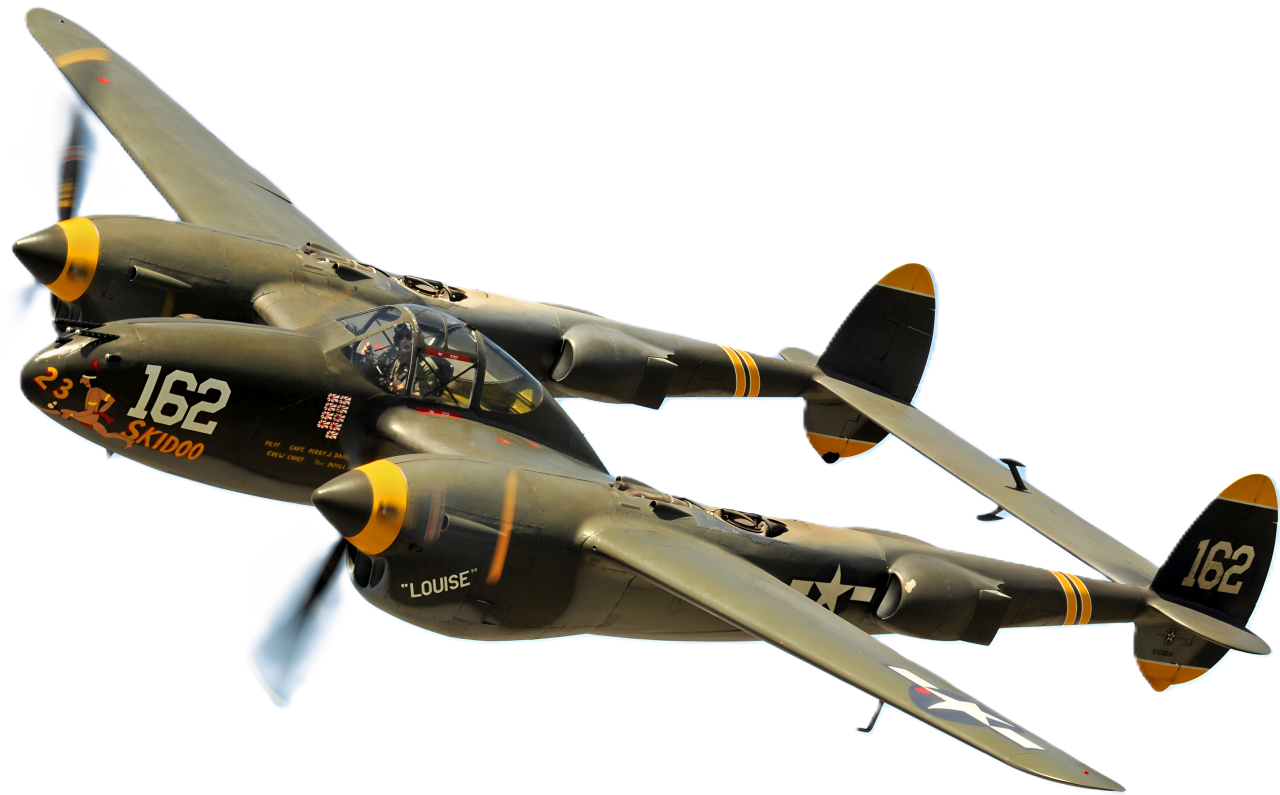
- Když letectvo USA oslovilo výrobce s požadavkem na konstrukci letadla s rychlostí min. 580 km/h ve výšce 6 000 m a schopné startovat a přistávat na nezvykle krátké dráze, tak všechny společnosti až na jednu odmítly.
- Albert Einstein kdysi řekl ,,Když něco nefunguje, protože je to nemožné, tak přijde někdo, kdo neví, že to nejde, udělá to a ono to funguje." A přesně takový byl mladý konstruktér Clarence Leonard ,,Kelly" Johnson.
- První let P-38 se uskutečnil 27. ledna 1939 a okamžitě bylo jasné, že jde o letadlo, které ve své době nemělo konkurenci.
- Pokud se do kokpitu dostal schopný pilot, tak stroj u nepřátel budil hluboký respekt, díky kterému němci letadlo přezdívali jako "Dvouocasého ďábla".
- Na P-38 létala esa s největším počtem sestřelů ze všech amerických pilotů jako Richard Ira Bong a Thomas B. McGuire, nabo právě dvojité eso kapitán John Simon Loisel.
- Slavný spisovatel, autor Malého prince Antoine de Saint-Exupéry létal během druhé světové války na průzkumné verzi P-38. Z mise nad Francií 31. července 1944 se již nikdy nevrátil. Ani dnes se s jistotou neví zdali byl sestřelen, nebo jeho stroj havaroval.
- Snad jedinou nevýhodou stroje byl horší výhled přes dlouhý kryt kapoty a proto piloti pojížděli po dráze ,,hadí chůzí".
- Po technické úpravě Charlese Lindbergha dokázal stroj lépe využít palivo a zvýšit dolet v boji až na 2 600 km.
- V různých verzích bylo do roku 1945 vyrobeno 9923 ks.
- V některých armádách letadla sloužila až do roku 1965.
- Po světě je stále 6 letuschopných strojů.
Technické parametry:
- rozměry: rozpětí 15,85 m, délka 11,53 m, výška 3,91
- hmotnost prázdného letadla 5806 kg
- vzletová hmotnost 7938 kg (max. 9798kg)
- pohonná jednotka 2x 12 válcový motor Allison V-1710-89/91 o výkonu 1048 kW
- objem palivových nádrží 1552 l
- maximální rychlost 665 km/h
- operační dolet 2000 km (max. 4184km)
- stoupavost 24,1 m/s
- maximální letová hladina 13 410 m
- výzbroj 4x kulomet Browning M2 ráže 12,7 mm, 1x kanón Hispano M-2C ráže 20 mm + případně 2x letecká puma 736 kg
- posádka 1
Ze vzpomínek kapitána Johna S. Loisela:
„Když letíte na misi máte dvě možnosti. Buď si v hlavě budete stále přehrávat myšlenky co, jak, kdyby, proč atp. a zešílet z toho, nebo se zkrátka nasměřujete na hlavní seskupení nepřítele, budete ignorovat samotné letce a vrhnete se do toho největšího shluku, který uvidíte."