
























German self-propelled assault gun Sturmgeschütz III Ausf.D COBI 2675 - Limited Edition WW II 1:28
| List Number: | COBI-2675 |
| EAN: | 5902251026752 |
| Warranty: | 24 months |
| Manufacturer: | COBI |
| Price excluding VAT: | 2 000,25 Kč |

STURMGESCHÜTZ III Ausf.D MODEL | COBI 2675 - Limited Edition
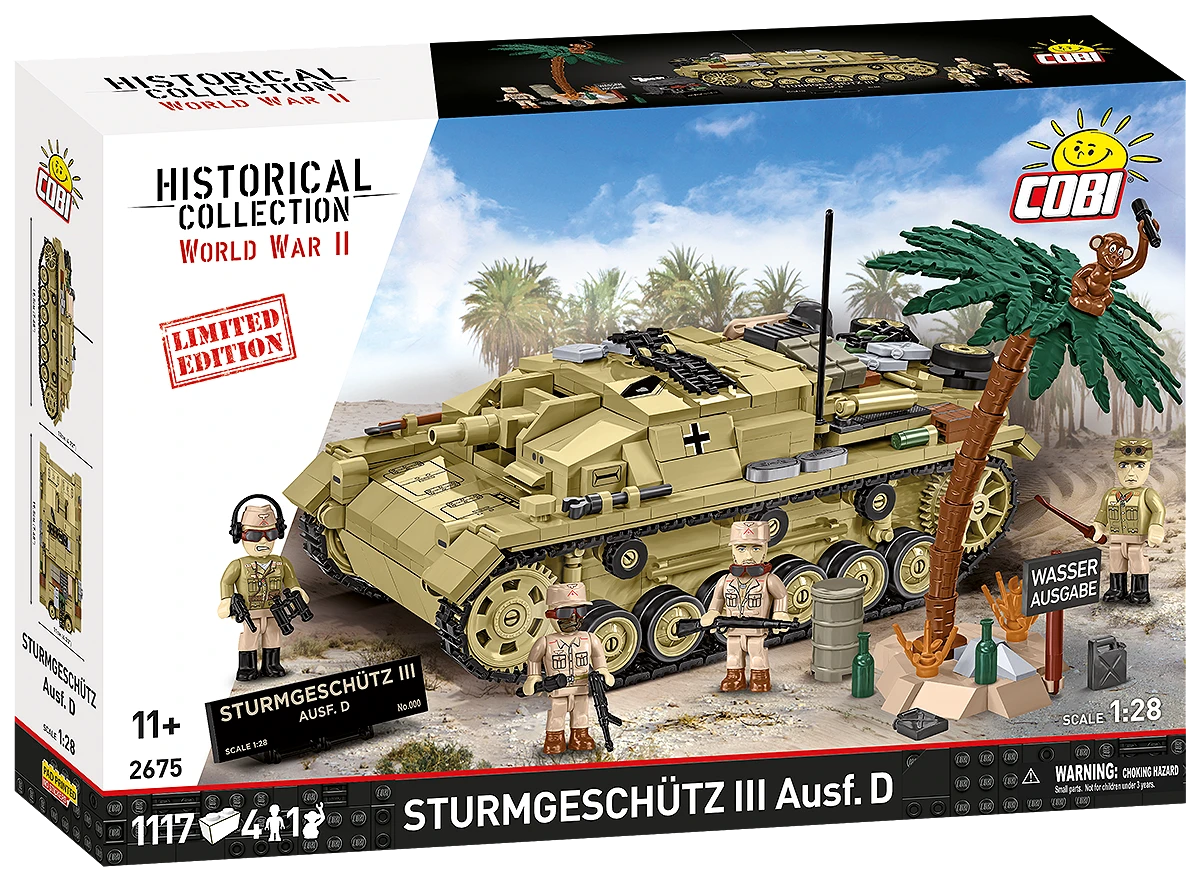
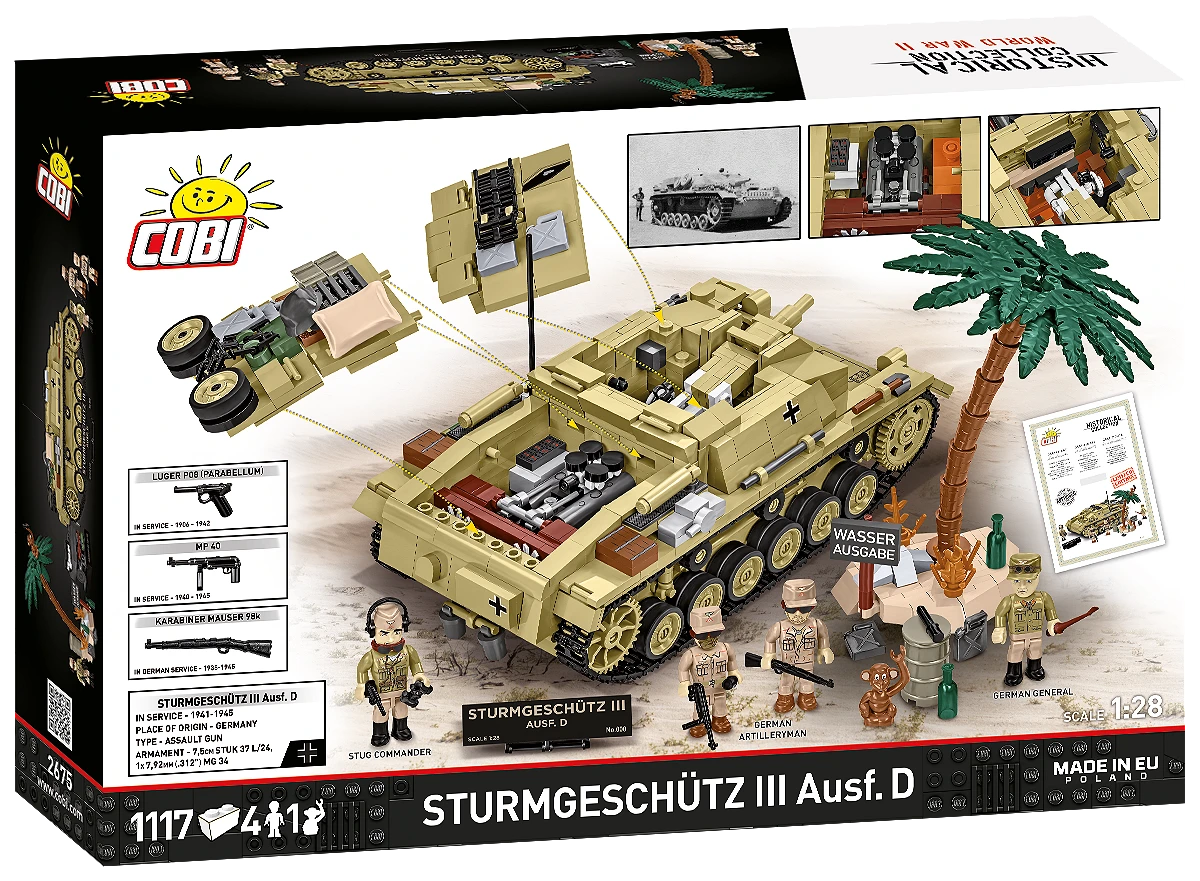
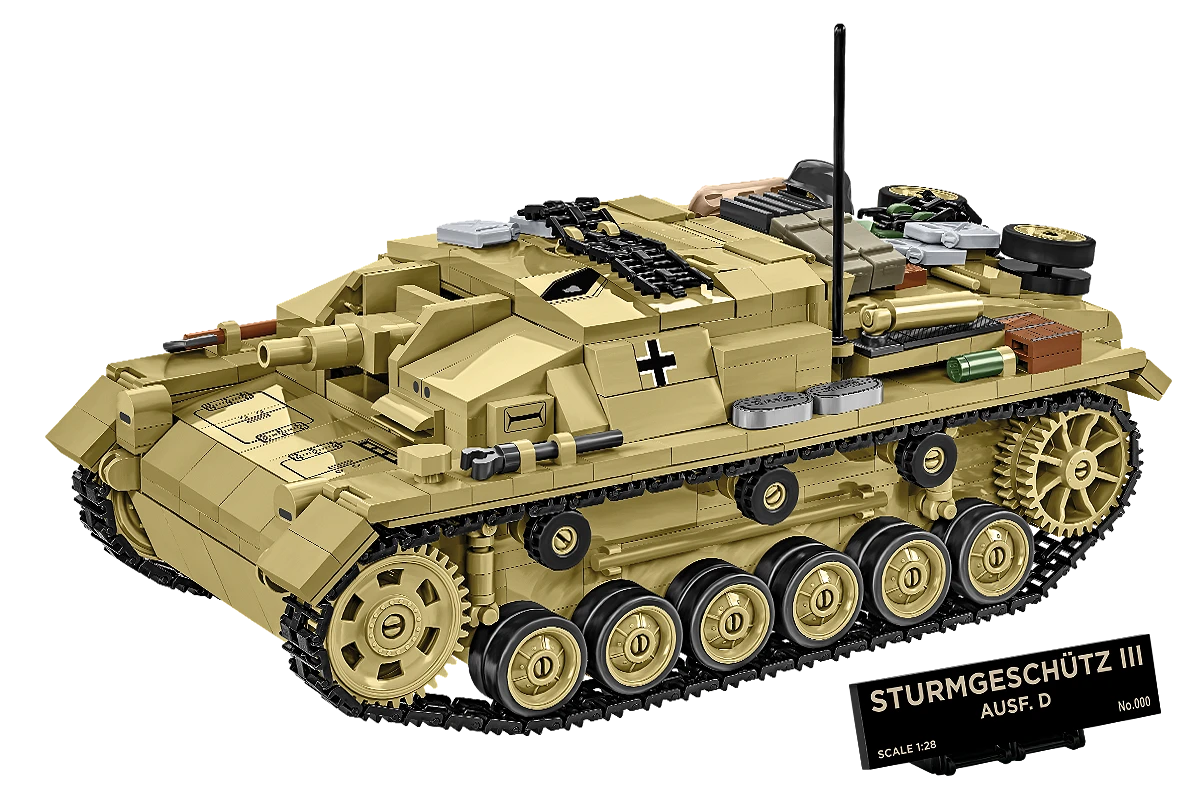
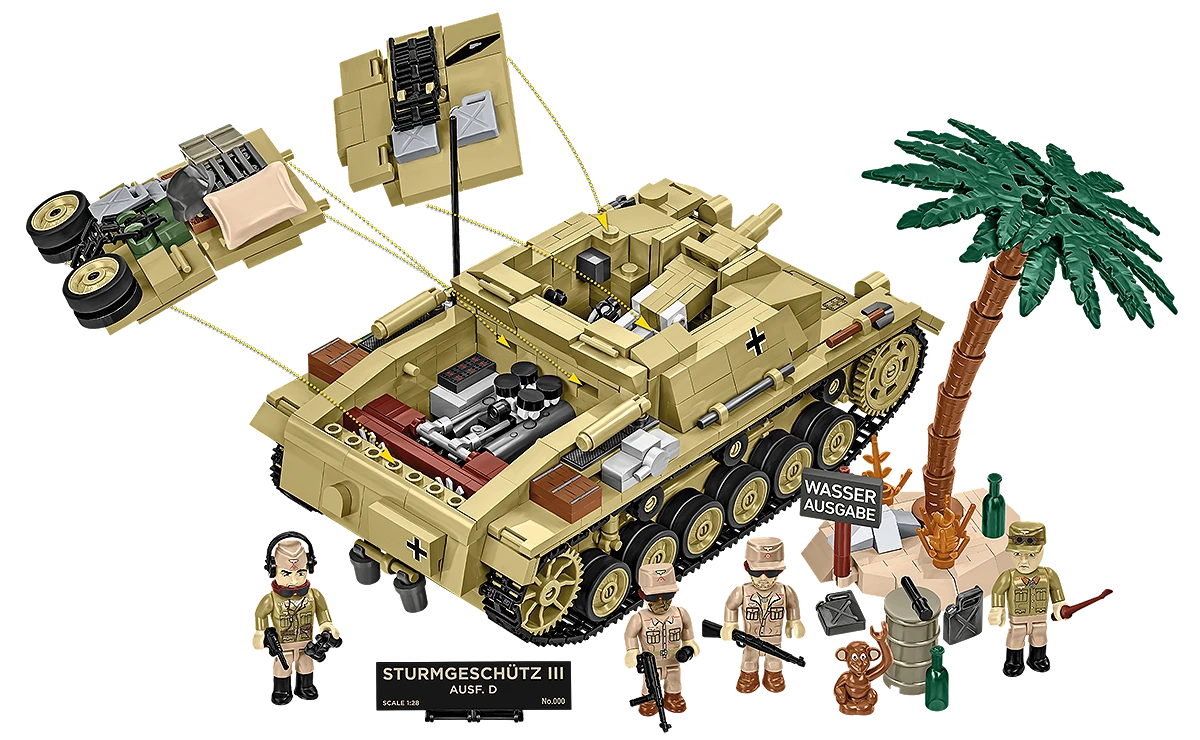
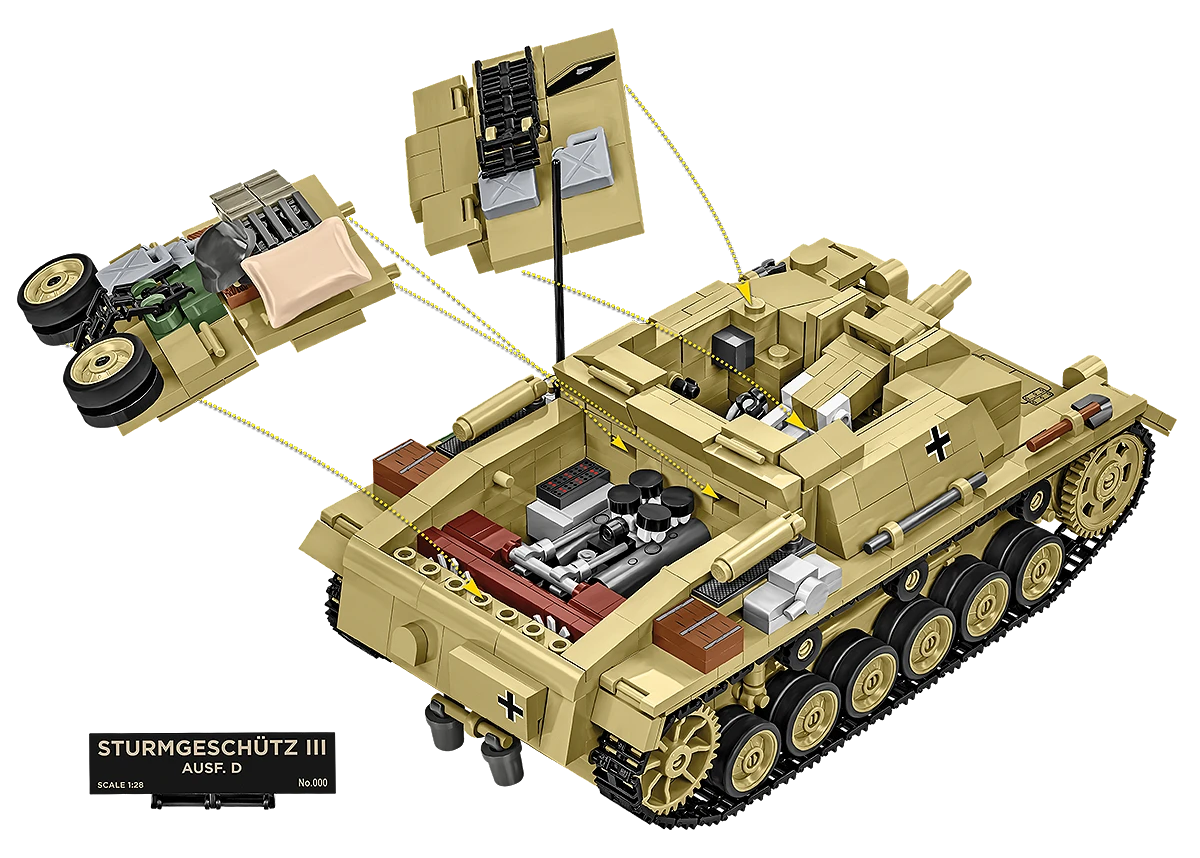
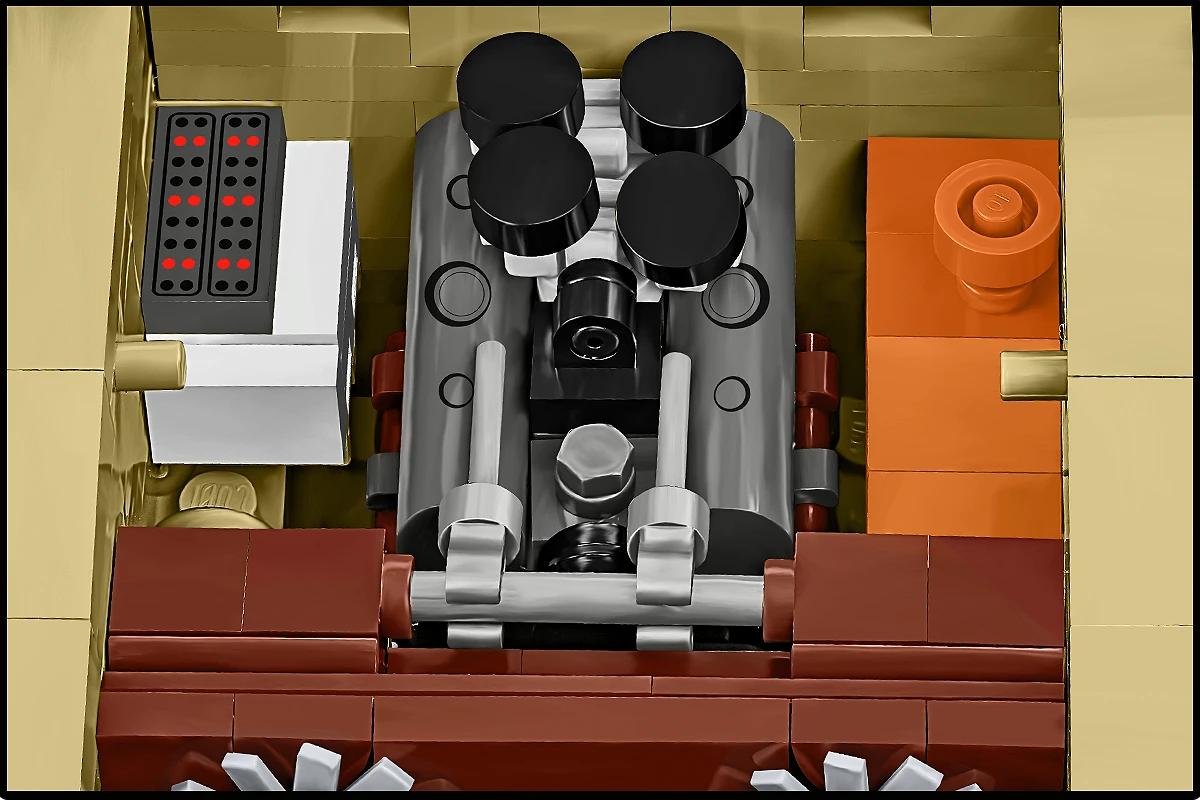
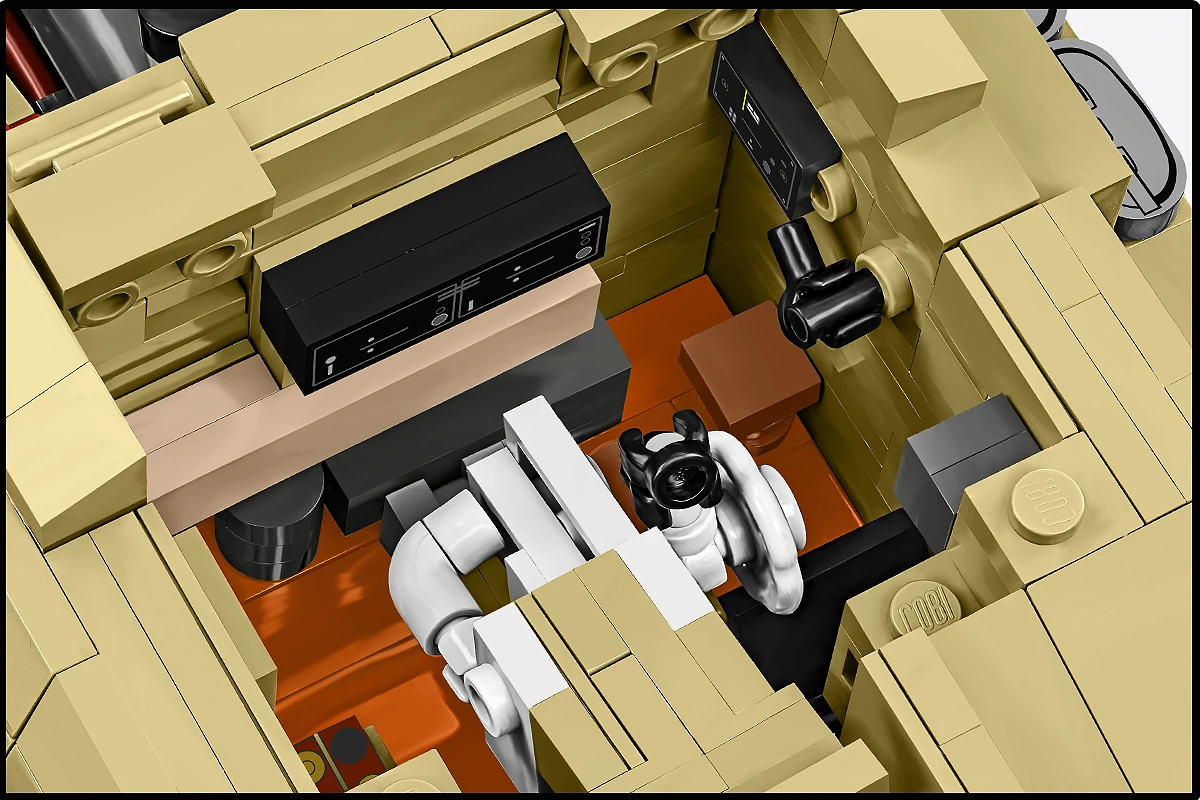
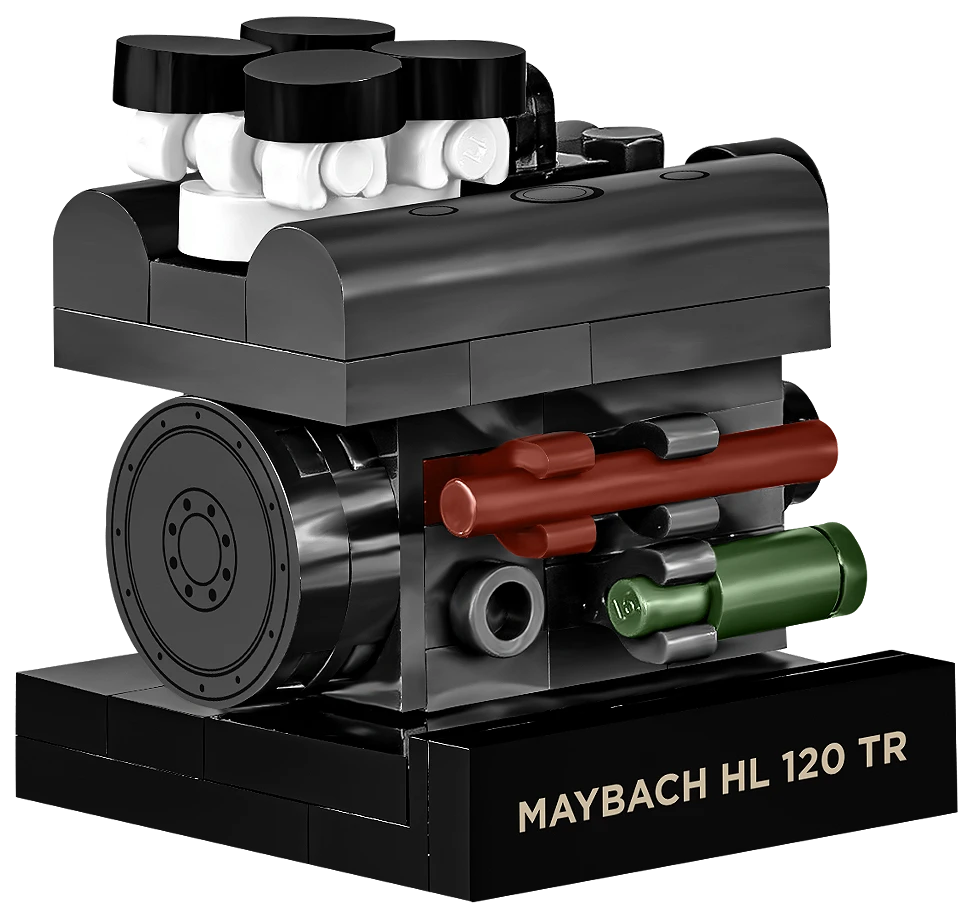
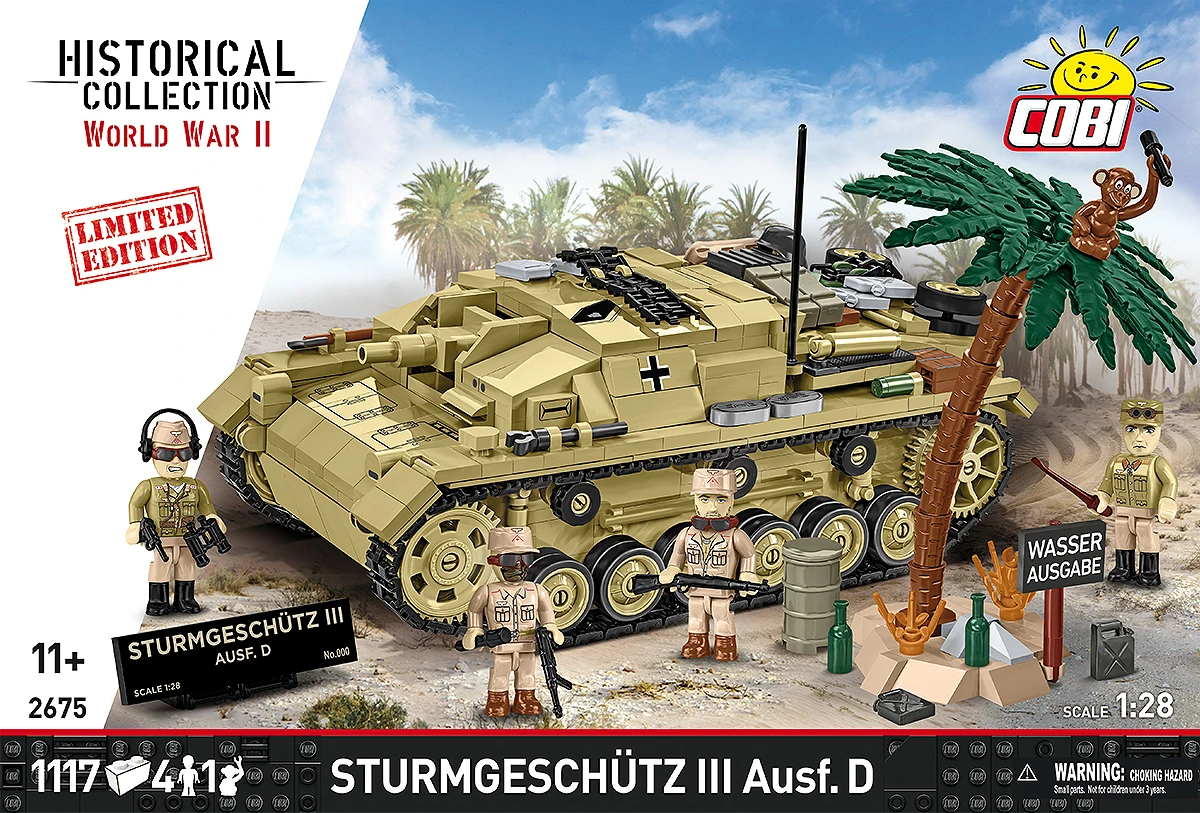
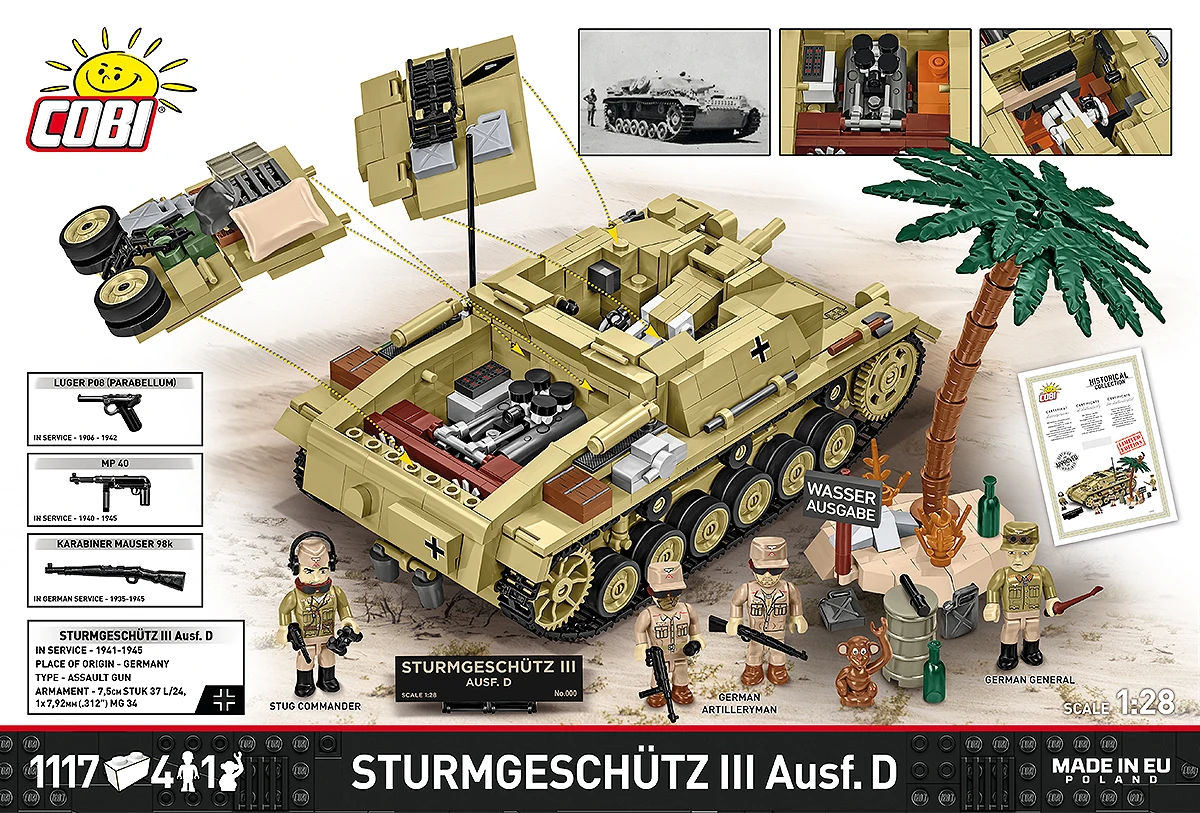
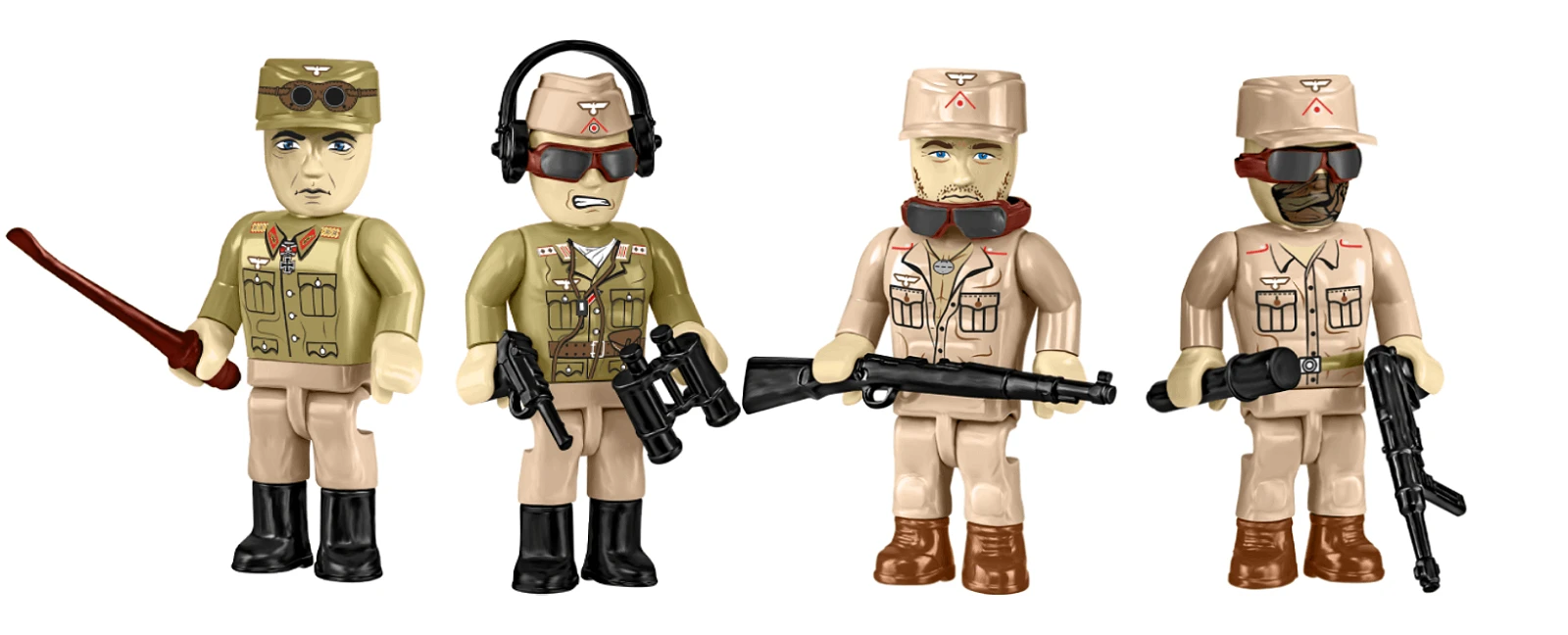
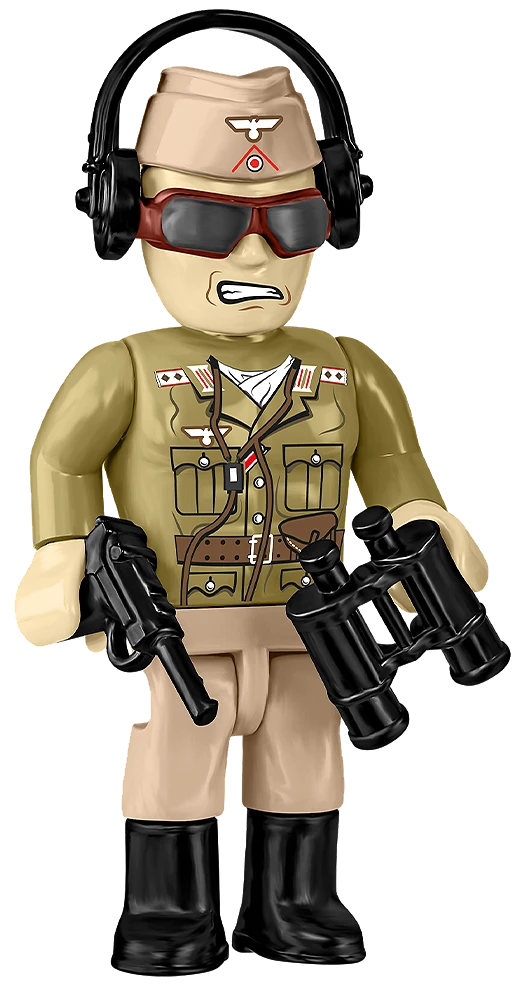
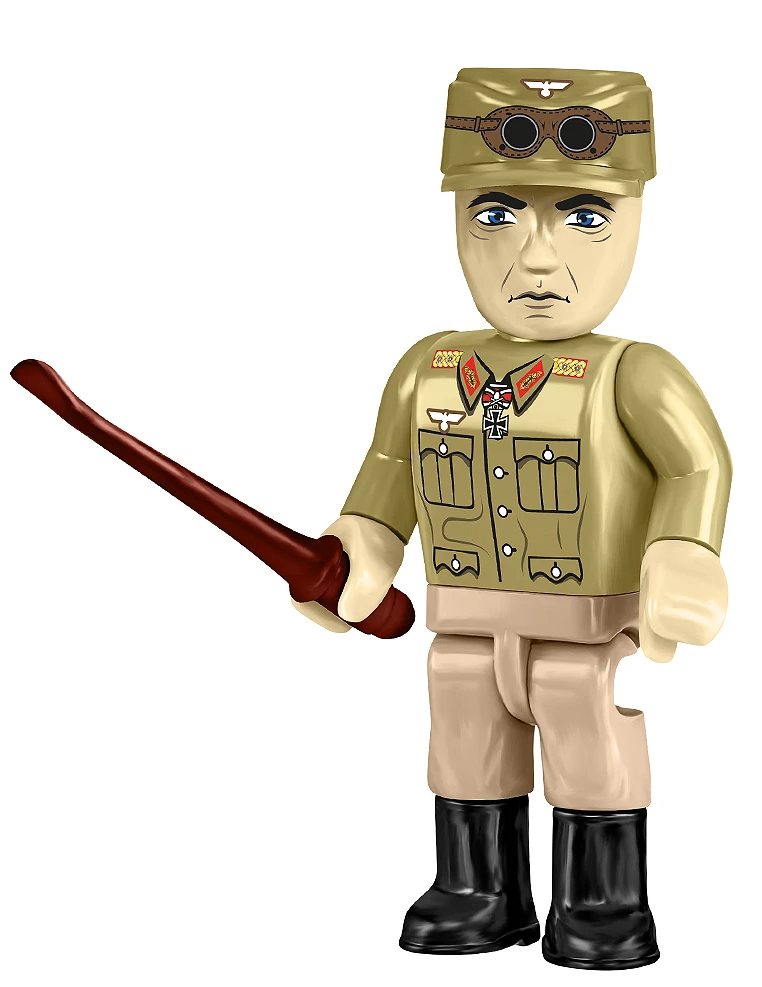
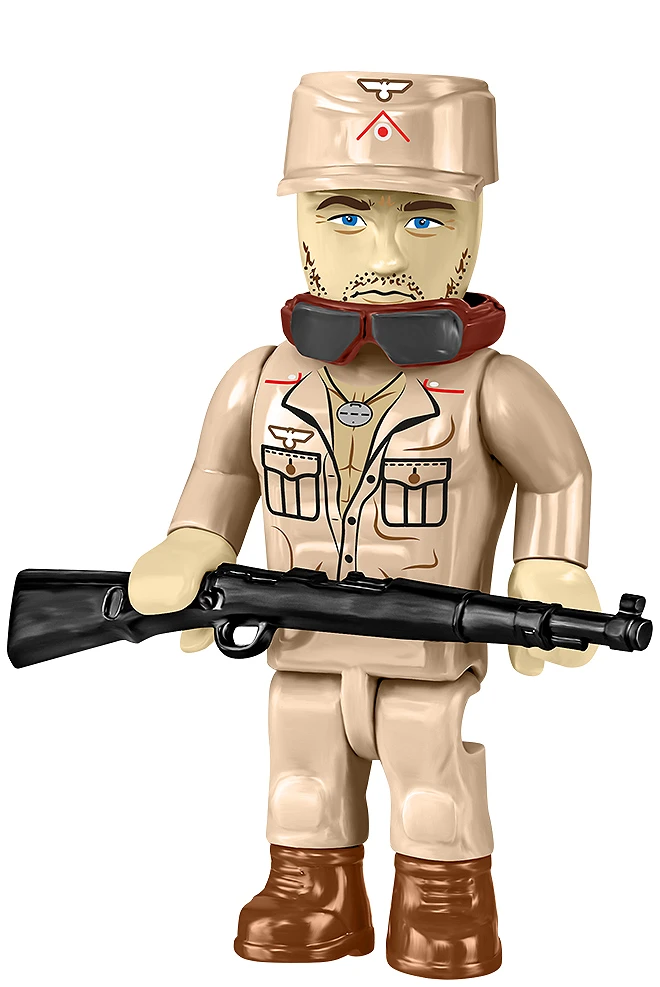
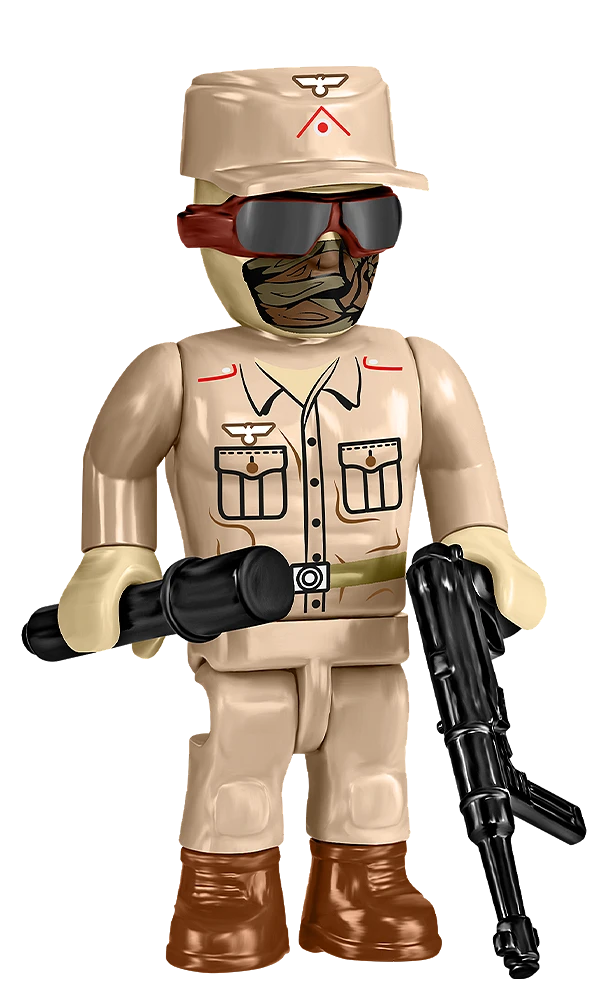
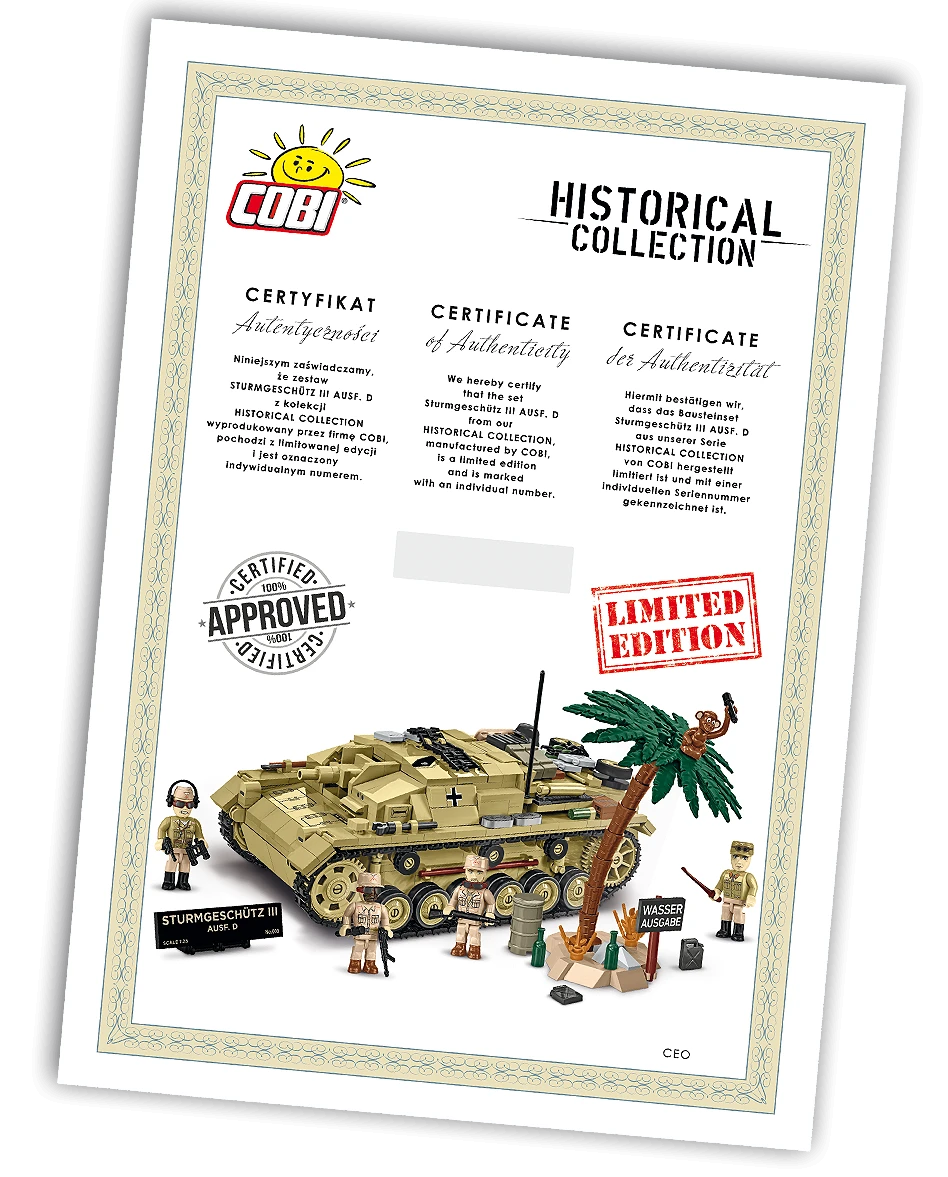
The building block set depicts an important moment from the German Afrikakorps campaign at the "Wasserausgabe" drinking water rationing point. The assault gun model features adjustable gun elevation, rubber-tired wheels, and functional tracks. The model can be easily rolled. The roof of the superstructure can be removed to look into the crew compartment and the gun's recoil system. Under the rear cover lies the Maybach engine, which can be removed from the tank and displayed separately. Spare road wheels, jerry cans, a bag of provisions, and several spare track links are attached to the engine cover. On the sides of the model, you will find wooden crates, along with a mounting bar and a wrench secured in their mounts. To complete the scenery, the package also includes a mature palm tree, an information sign, a barrel, bottles, and additional fuel and water jerry cans. Sitting in the palm tree is a cute but dangerous monkey with a grenade in its hand. In this limited edition package, you will also find a figure of German Field Marshal Erwin Rommel with a marshal's baton, a tank commander figure with binoculars, and two German soldiers armed with Mauser rifles. Inside the package, there is a certificate with a unique serial number confirming the authenticity of the product.
Did you know: 
The StuG III assault gun, or SdKfz 142, was developed by Daimler-Benz in 1938. However, the idea itself originated somewhat earlier, based on a concept created by Erich von Manstein known as "Sturmartillerie". The fixed turret with a 75 mm gun was welded onto the chassis and hull of the famous Panzer III tank, which greatly simplified service logistics in difficult field conditions. According to the original design, the assault guns were supposed to have an open roof, but this proved unsuccessful during tank trials.
In the summer of 1941, German factories began producing the modernized version D (Sd.Kfz 142), which was newly equipped with an intercom. The gun sight received a new cover that eliminated a vulnerable spot for the crew. The biggest change, however, occurred in the machine's cabin. The angular lines were replaced, the cabin was widened, and the sides were sloped. These modifications were intended to increase crew protection, allow the installation of a modern radio station, and increase the amount of stored ammunition.
At the beginning of March 1943, the German Armament Office decided to install additional 30 mm side armor to protect both the machine and the crew from Russian anti-tank rifles. Newly produced StuGs were coated with 70 kg of Zimmerit anti-magnetic paint. Independent of the Armament Office's instructions, field mechanics further strengthened the armor, and machines fitted with concrete blocks could also be seen on the battlefield.
After changes on the Eastern Front, StuGs primarily fulfilled defensive tasks, and the installation of smoke grenade launchers was supposed to help with this. However, they were often damaged, and the generated smoke penetrated the cabin to such an extent that it forced the crew to abandon the vehicle. Based on combat experience, the installation of smoke grenades was discontinued. Despite all its minor shortcomings, the StuG was an extremely effective weapon, and with 10,001 units produced, it was one of the most widely used types of German armored vehicles.
Captured machines were also used by the Czechoslovak army under the designation ShPTK 40/75N.
The last units were decommissioned by the Finnish army as late as 1966.
Technical parameters:
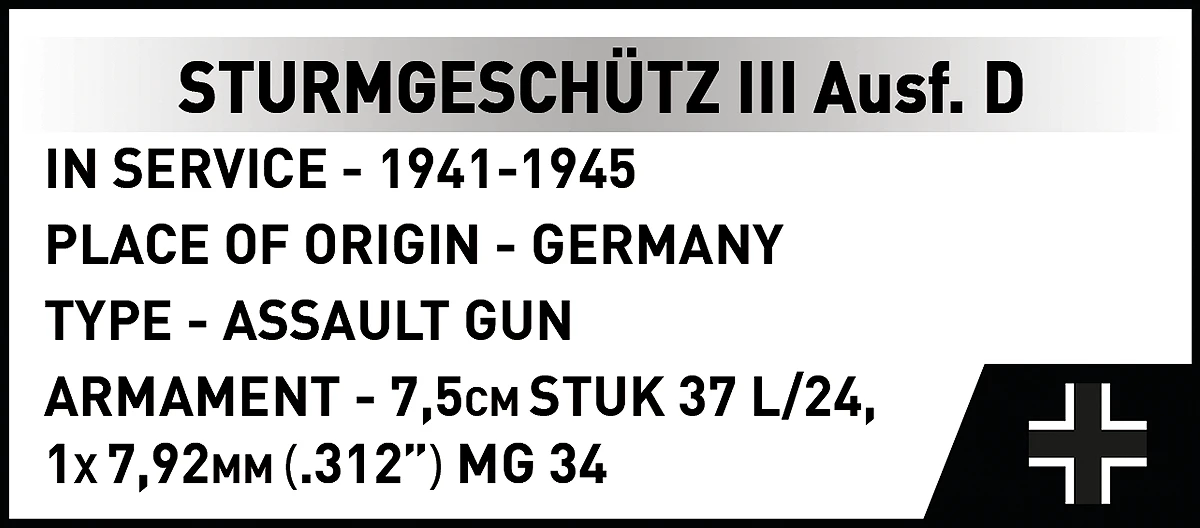
- dimensions: length 6.85 m, width 2.95 m, height 2.16 m
- weight: 23,900 kg
- armor: 16-80 mm
- powerplant: V-12 Maybach HL 120 TRM gasoline engine with a power output of 220 kW
- maximum speed: 40 km/h
- fuel tank capacity: 310 l
- range: 165 km
- main armament: STUK 37 L/24 75 mm caliber gun (54 rounds of ammunition)
- secondary armament: MG 34 7.92 mm caliber machine gun
- crew: 4
From the memoirs of commander Klaus Yannic Horstman:
"The sun over the Libyan desert had long since stopped burning and began to literally murder. Inside the StuG, it was over 50 degrees. The air was saturated with the smell of burnt gasoline, oil, and hot metal. Our situation was critical. Not because of British tanks, but because of empty canteens and jerry cans. Our only hope was to reach the Wasserausgabe supply point. Several places were marked on the field maps, but navigating in the desert is very difficult. We only had enough fuel left for about two hours of driving..."
About the COBI building block set:
- the COBI 2675 building block set consists of 1117 high-quality ABS pieces
- number of figures: 4 + monkey
- collection: Limited Edition - World War II
- scale: 1:28
- pad printed - no stickers
- faithful reproduction
- made in the EU
- compatible with other building block brands
- recommended age: 11+
| Scale | 1 : 28 |
|---|---|
| Recommended age | 11+ |
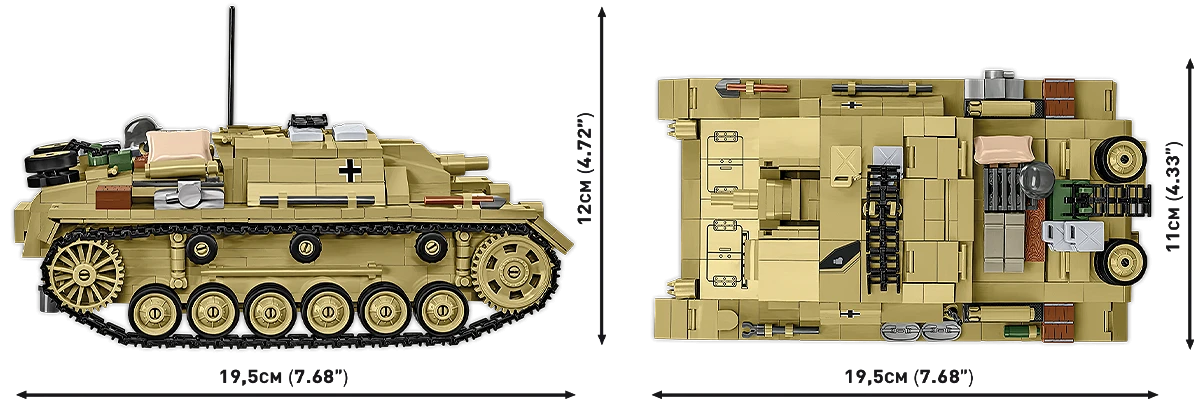
| Dimensions after assembly | 19,5 x 11 x 12 cm |
| Number of figurines | 4 pcs |
| Number of pieces | 548 pcs |
| Contains luminous blocks | No |
| Material | Plastic |
| Collection | World War II |
| Compatible with other brand of kits | Yes |
Related items
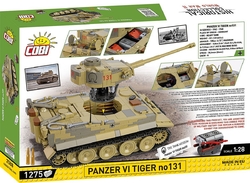
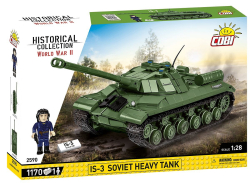

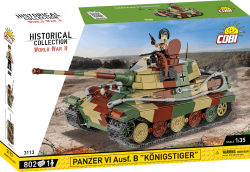
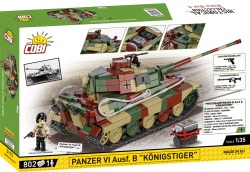



+ Skvělá komunikace
Všechno proběhlo bez problémů.
+ Rychlost dodání
- Nic
Velmi rychlé dodání.Úplná spokojenost.
+ Rychlost zpracovani i odeslani zasilky
+ Rychlé a solidní jednání.

COBI kit scales: how they work and why they matter
COBI building sets are known for their emphasis on realistic representation of both military and civilian vehicles. One of the key parameters that influences the final model is the scale of the ...
Read whole
The story of COBI building kits - European quality that conquers the world
When people hear the phrase plastic building blocks, most automatically think of the legendary LEGO brand. In recent years, however, the European brand COBI has also been gaining increasing popularity, ...
Read whole



Cobishop - Ondřej Vašťák
náměstí Hrdinů 109,
68603 Staré Město,
Česká republika